Since the COVID-19 Pandemic began in early 2020, marginalized and vulnerable populations have been especially adversely impacted. NASW’s Connect to End COVID-19 initiative was launched to provide equitable training and outreach that promote informed vaccine decision-making on the part of social workers and their clients, particularly among those who are vulnerable, marginalized, and/or vaccine hesitant.
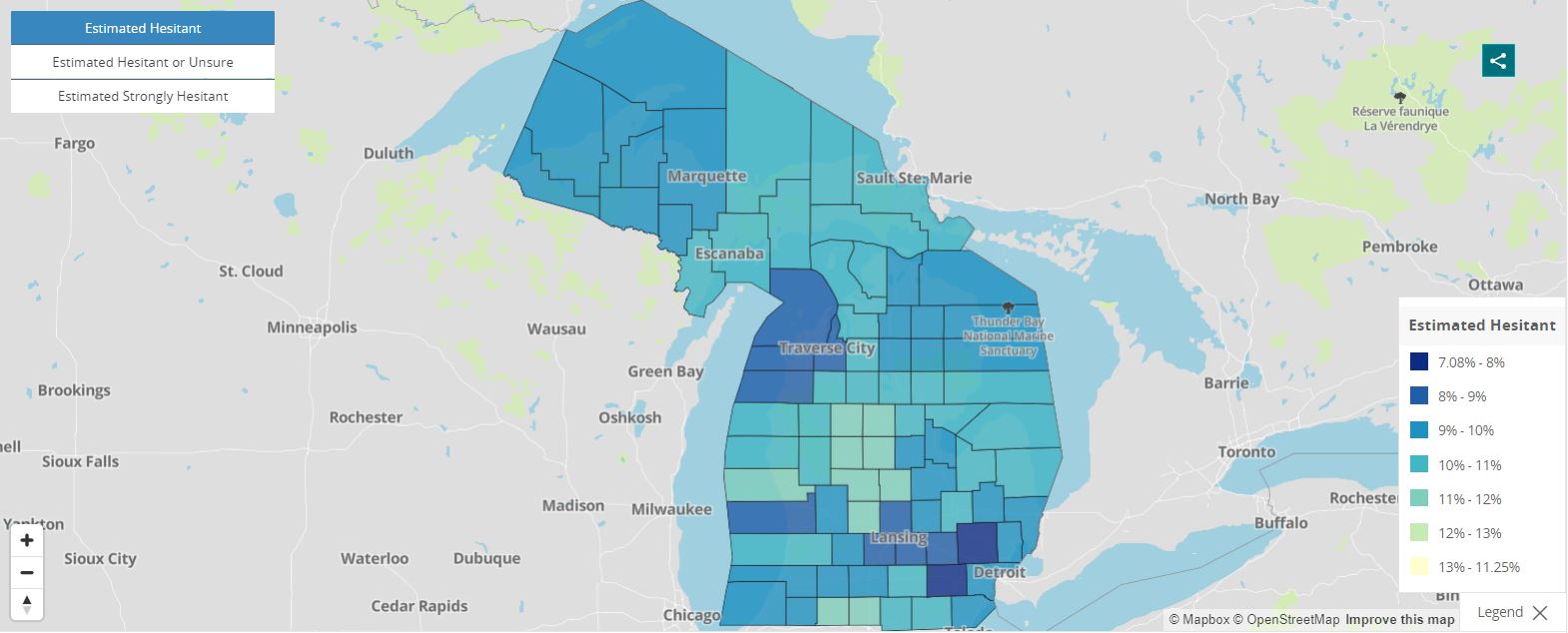
The diagram below shows the vaccine hesitancy by county in the state of Michigan which includes estimated hesitant, estimated hesitant or unsure, and estimated strongly hesitant.
There are various special populations in Michigan with whom social workers work. The goal of NASW’s Connect to End COVID-19 initiative is to identify communities where there is a low COVID-19 vaccine uptake and to encourage social workers and their clients to engage in informed vaccine decision-making. State-specific data is provided below on vaccine hesitancy and several special populations have been identified. The special populations are noted below.
Communities with Less Healthy Environments
As of December 10, 2022, deeper examination of data reveals that counties with healthier environments (including environmental conditions such as air pollution and drinking water violations, but also housing, transportation, unemployment, poverty income inequality, educational attainment, availability of health providers, and health insurance coverage) have much higher rates of vaccine uptake. These counties also tend to have healthier behaviors. Conversely, counties that are already unhealthy (those with lower preventative health utilization and higher rates of unhealthy behaviors) are least likely to utilize the vaccine.
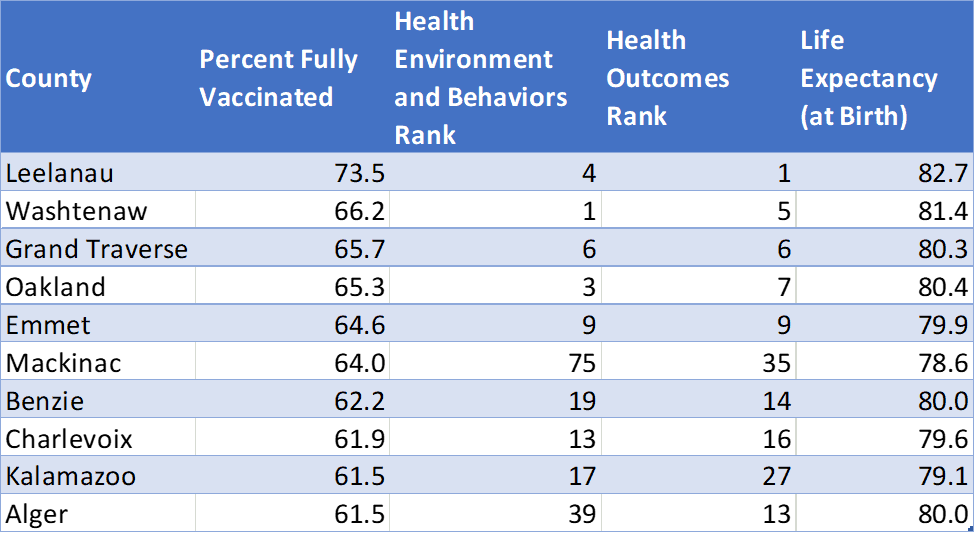
The ten counties with the highest vaccination rate are also generally rated high for their health environment and health outcomes. Additionally, all ten of these counties have a life expectancy above the state average (78.1 years).
Michigan Counties with the Highest Rate of COVID-19 Vaccination
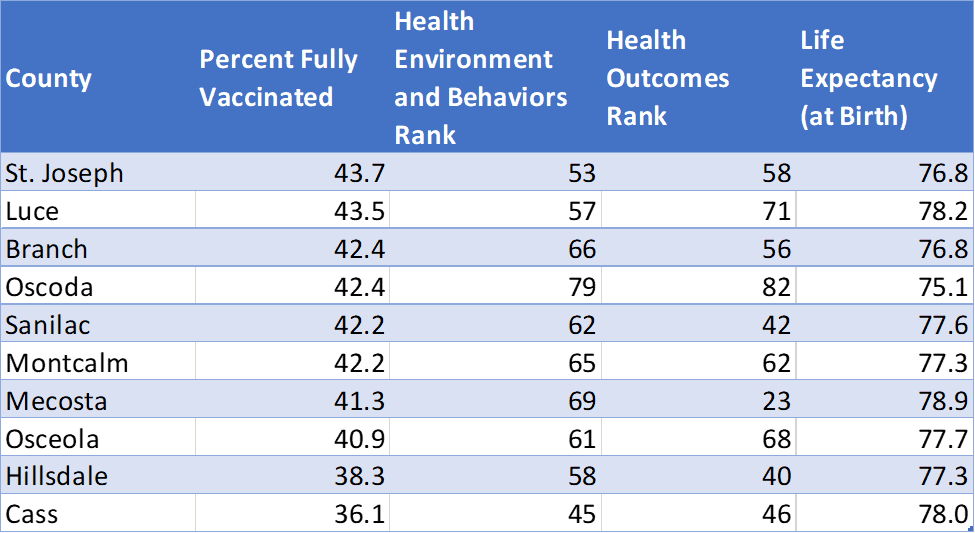
Conversely, the counties with the lowest proportion of fully vaccinated residents rank low on overall health.
Most also have a below average life expectancy.
Michigan Counties with the Lowest Rate of COVID-19 Vaccination
Unfortunately, these differences in vaccination rates further contribute to the larger health disparities that exist among different communities. These data also suggest that differences in health literacy contribute to differences in health behaviors and, ultimately, health outcomes throughout Michigan.
In Michigan as of April 4, 2022, the vaccine ambivalent are most likely to be Black. Medical racism and the history of the medical community and public health researches using Black communities for unethical research are some of the important factors to consider when thinking about vaccine hesitancy in Black communities.
Vaccine uptake has increased for all racial and ethnic populations since September 2021, with the greatest increase taking place in Hispanic and Asian and Pacific Islander communities. The trend of which communities are least to most vaccinated remains the same today: Black people, White people, Hispanic people, and Asian and Pacific Islander people respectively.
Despite outreach efforts, Michigan vaccine uptake for all racial and ethnic groups are lower than the national averages by 8% for the White population, 13% for the Black population, 6% for the Hispanic population, and 18% for the Asian and Pacific Islander population.
Note: State-level data on vaccinations among American Indian or Alaska Native people is limited. Unfortunately, this population was not included in the data source below, so comparisons could not be made between the September 2021 and April 2022 data.
Vaccination Coverage in Michigan as of September 5, 2022 by Race/Ethnicity
Covid-19 Vaccination Coverage Among Michigan American Indians and Alaska Natives as of March 8, 2022
Earlier in the pandemic, health officials were worried Indigenous populations would be hesitant to get a COVID vaccine. Now, they’re among the most vaccinated populations in the country according to the U.S. Centers for Disease Control and Prevention. Visit https://www.arcgis.com/apps/dashboards/f8a110761d7b41288ef39f95843563b8 to see vaccination data for American Indians and Alaska Natives in various Michigan counties.
Communities that Distrust Government Response Efforts
Communities who have experienced other public health and medical crises in which the government response efforts led to a low amount of trust appear to be impacting vaccination rates. For example, as Flint continues to grapple with the effects of the city's water crisis, years of disinformation and mistrust appear to be impacting residents' willingness to receive COVID-19 vaccines.
At one point, the Flint area ranked fourth in the nation for the highest COVID-19 outbreak numbers relative to population. Yet, even as COVID-19 vaccine distribution ramped up across the state in the winter and early spring of 2021, the percentage of Genesee County residents who had received at least one dose of any vaccine remained low at just over 21% by mid-March.
 Print Page